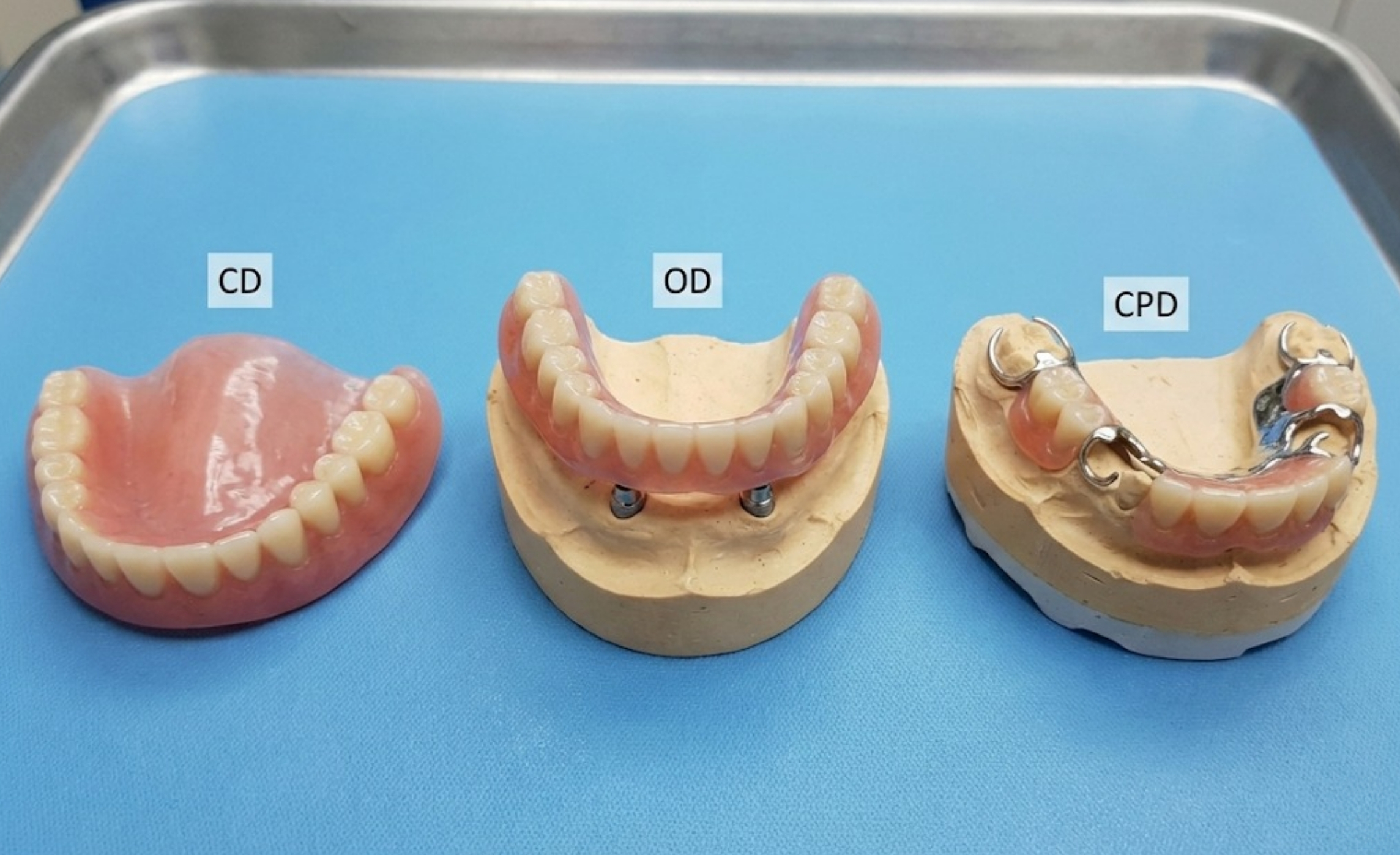
This page compares three major types of denture solutions: Complete Dentures (CD), Overdentures (OD), and Cast Partial Dentures (CPD). Each option has unique advantages and considerations for tooth replacement.
| Feature / Benefit | Complete Dentures | Cast Partial Dentures (CPDs) | Implant-Supported Overdentures |
|---|---|---|---|
| Best For | Patients with all teeth missing in an arch | Patients with several missing teeth but some natural teeth remain | Patients wanting maximum stability with denture support from implants |
| Support Type | Rests entirely on gums | Supported by metal framework + existing teeth | Supported by 2–4 dental implants (snap-on system) |
| Stability | Moderate; may loosen over time | Good; clasps improve grip | Excellent; very stable and secure |
| Chewing Efficiency | Basic to moderate | Good | High; closest to natural chewing |
| Comfort Level | Good after adaptation | Comfortable due to lightweight metal framework | Very comfortable with less gum pressure |
| Aesthetics | Natural-looking | Natural, minimal visible metal | Highly aesthetic with improved facial support |
| Bone Preservation | No; bone loss continues over time | Minimal influence | Yes; implants preserve jawbone |
| Speech Improvement | Moderate | Good | Excellent; minimal movement |
| Longevity | 5–7 years (average) | Long-lasting due to metal framework | Very long-lasting with proper maintenance |
| Maintenance | Daily cleaning; remove at night | Similar care; easy to maintain | Remove for cleaning; implant components need periodic care |
| Cost | Affordable | Moderate | Higher than dentures but cost-effective compared to full implant bridges |
| Overall Advantage | Economical full-mouth solution | Durable and comfortable for partial tooth loss | Superior stability, function, and confidence |