
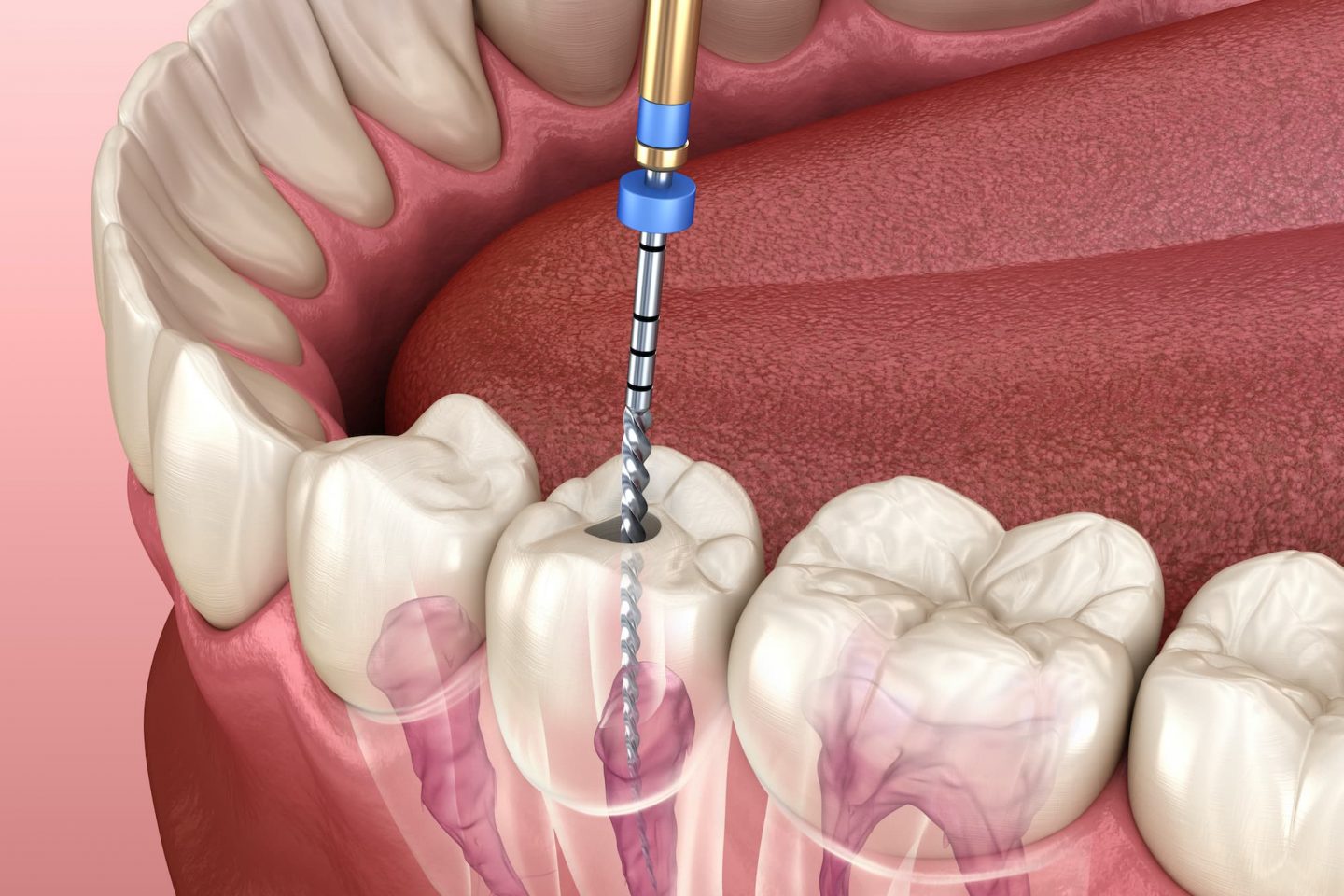
A human tooth has three layers: Enamel, Dentin, and Pulp, like the layers of an onion. The outer layer you see and brush is Enamel. Below that is Dentin, and at the center is Pulp, where the nerve and blood supply are. If you have issues in the pulp, dentists might suggest RCT.
A root canal treatment is a dental procedure to remove inflamed or infected pulp on the inside of the tooth which is then carefully cleaned and disinfected, then filled and sealed. Root canal treatment is designed to eliminate bacteria from the infected root canal, prevent reinfection of the tooth and save the natural tooth.
Root canal treatment is needed when dental X-rays show that the pulp has been damaged by a bacterial infection. The pulp may become inflamed if it's infected by bacteria, allowing the bacteria to multiply and spread. The symptoms of a pulp infection include: pain when eating or drinking hot or cold food and drink.
It's necessary to have endodontic or root canal treatment when the inside of your tooth (the pulp) becomes inflamed or infected as a result of deep decay, repeated dental procedures, faulty crowns or a crack or chip in the tooth.
1.Initial Consultation and Diagnosis
Examination: The dentist will conduct a thorough examination of your tooth and overall oral health.
X-rays: Diagnostic imaging will be taken to assess the extent of decay or infection and to guide the treatment.
2.Local Anesthesia
Anesthesia Administration: A local anesthetic is applied to numb the affected tooth and surrounding area, ensuring you are comfortable and pain-free throughout the procedure.
3.Tooth Isolation
Rubber Dam Placement: A rubber dam is placed around the tooth to keep it dry and free from saliva during the procedure.
4.Tooth Access
Creating an Access Opening: The dentist drills a small opening in the top of the tooth to access the pulp chamber and root canals.
5. Cleaning and Shaping
Removing the Infected Tissue: The dentist removes the diseased pulp tissue from the tooth’s interior.
Shaping the Canals: The root canals are cleaned, shaped, and disinfected to remove any remaining bacteria and debris.
6.Filling the Canals
Filling Material: The cleaned and shaped canals are filled with a biocompatible material called gutta-percha to seal the space and prevent future infection.
7.Sealing the Tooth
Temporary or Permanent Filling: A temporary filling is placed in the access opening if additional procedures are required. Otherwise, a permanent filling is applied to restore the tooth’s structure.
8.Restoration
Crown Placement: In many cases, a tooth that has undergone a root canal will need a crown to provide additional strength and functionality. The dentist will take impressions and may place a temporary crown until the permanent one is ready.
9.Follow-Up Care
Post-Treatment Instructions: You will receive care instructions to ensure proper healing and to manage any discomfort.
Check-Up Appointments: Follow-up visits are scheduled to monitor the tooth’s healing and to make any necessary adjustments to the restoration.