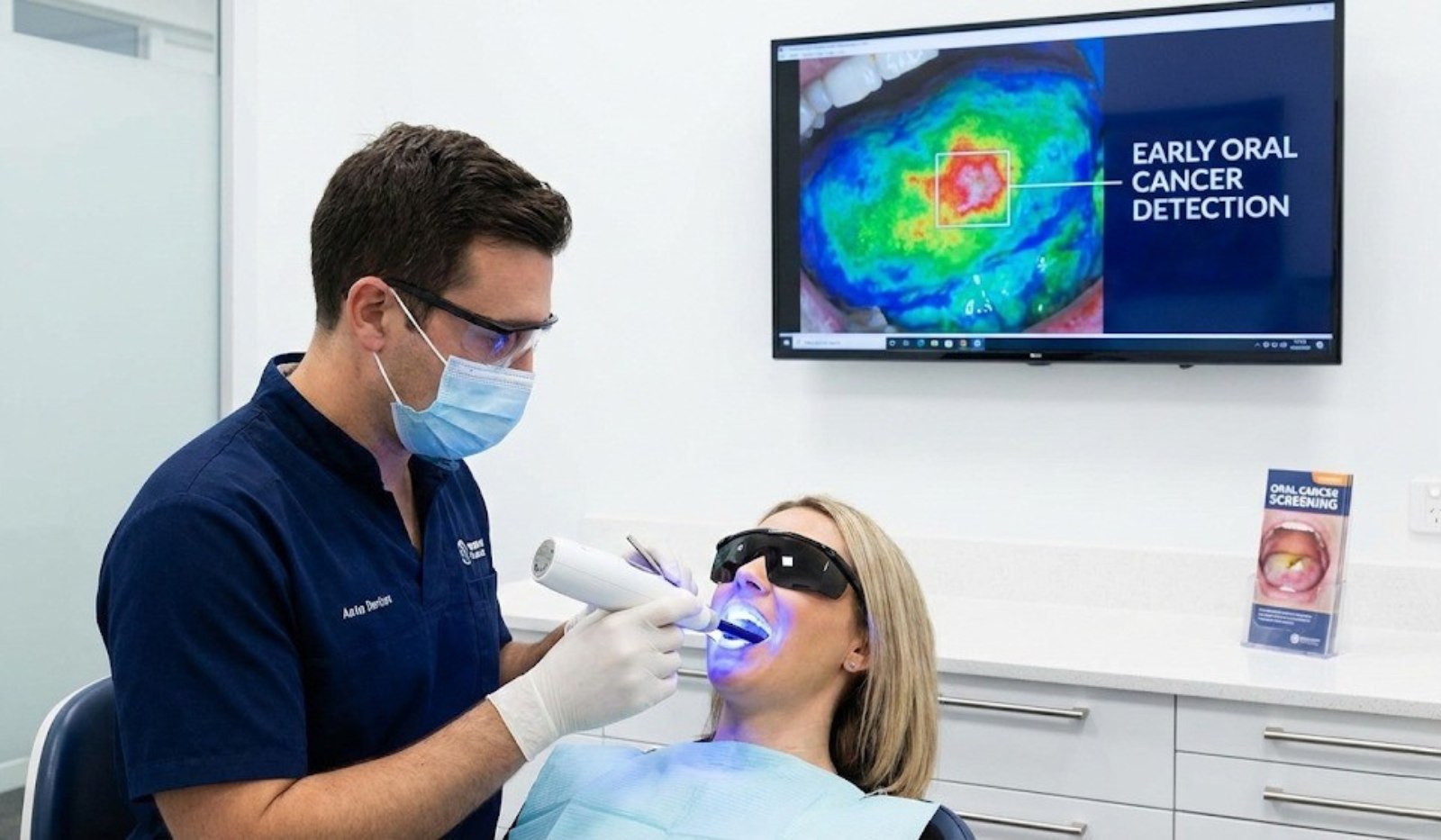
Early Oral Cancer Detection is a life-saving process that identifies precancerous changes, suspicious lesions, and early-stage oral cancer before they progress. When detected early, oral cancer is highly treatable, with significantly better outcomes and reduced treatment complexity.
Our clinic offers advanced oral cancer screening, combining expert clinical examination with modern diagnostic tools to ensure accurate, early identification of any abnormal changes in your mouth.
Early diagnosis of oral cancer can:
Regular screenings are especially important for individuals who use tobacco, pan masala, smoking, alcohol, or have persistent mouth sores.
If you notice any of the following lasting more than 2 weeks, get checked immediately:
Early symptoms are often painless—screening is the only way to detect them on time.
Lifestyle counseling is also part of early prevention.
Comprehensive Oral Examination
Inspection of the tongue, cheeks, gums, palate, throat, and lymph nodes.
Identification of Precancerous Lesions
Early detection of leukoplakia, erythroplakia, submucous fibrosis, and suspicious patches.
Screening with Advanced Tools
Enhanced visual inspection, magnification, and illumination to identify abnormalities.
Tobacco-Related Lesion Evaluation
Specialized assessment for chronic tobacco/pan masala users.
Biopsy Referral & Coordination
If needed, we guide you through biopsy procedures with trusted specialists.
Treatment of Irritation Sources
Smoothing sharp teeth, adjusting dentures, or treating trauma that may trigger lesions.
Habit Counseling & Preventive Guidance
Support for quitting tobacco & reducing risk factors.
We ensure accurate diagnosis, timely referral, and complete follow-up.
Your health and early protection are our highest priority.
If you chew tobacco, smoke, drink alcohol, or have persistent mouth sores, don’t ignore the warning signs. Early screening at our clinic can help detect problems before they become serious. Book your Oral Cancer Screening Appointment today for a safer, healthier future.
Oral cancer is an abnormal growth of cells in the mouth, lips, tongue, cheeks, gums, palate, or throat. It often begins as small, painless lesions that can be easily missed—making early screening extremely important.
Watch for:
Any symptom lasting more than 2 weeks requires immediate evaluation.
Most mouth ulcers are harmless and heal in 7–10 days. However, ulcers that last over 2 weeks, keep recurring, or appear unusual should be screened to rule out serious conditions.
Major risk factors include:
Tobacco + alcohol significantly increase the risk.
Early oral cancer is often painless, which is why it goes unnoticed. Pain usually appears in later stages. Regular screening ensures detection before symptoms worsen.
Screening is strongly recommended for:
High-risk individuals need annual screening.
A dentist performs a thorough oral examination of the mouth, tongue, cheeks, gums, throat, and neck nodes. Suspicious areas may require advanced screening tools or a biopsy referral for confirmation.
Yes—when detected early, oral cancer has very high success rates and requires less aggressive treatment. Late detection reduces survival chances and increases complexity.
A typical screening takes 5–10 minutes and is painless. High-risk patients may need additional evaluation.
Genetics may play a role, but lifestyle factors like tobacco, alcohol, and chronic irritation contribute far more significantly.
Chronic irritation from sharp teeth or ill-fitting dentures does not directly cause cancer, but it can contribute by causing repeated trauma—especially in patients who use tobacco. Getting irritants corrected is important.
Yes. White or red patches can be precancerous and require immediate examination. Not all patches turn cancerous, but early evaluation is critical.
Suggested frequency:
No. Younger individuals who use tobacco, alcohol, or have HPV infections are also at risk. Early screening is recommended for everyone.
Yes. Quitting tobacco greatly reduces oral cancer risk over time—combined with regular screenings and lifestyle changes.