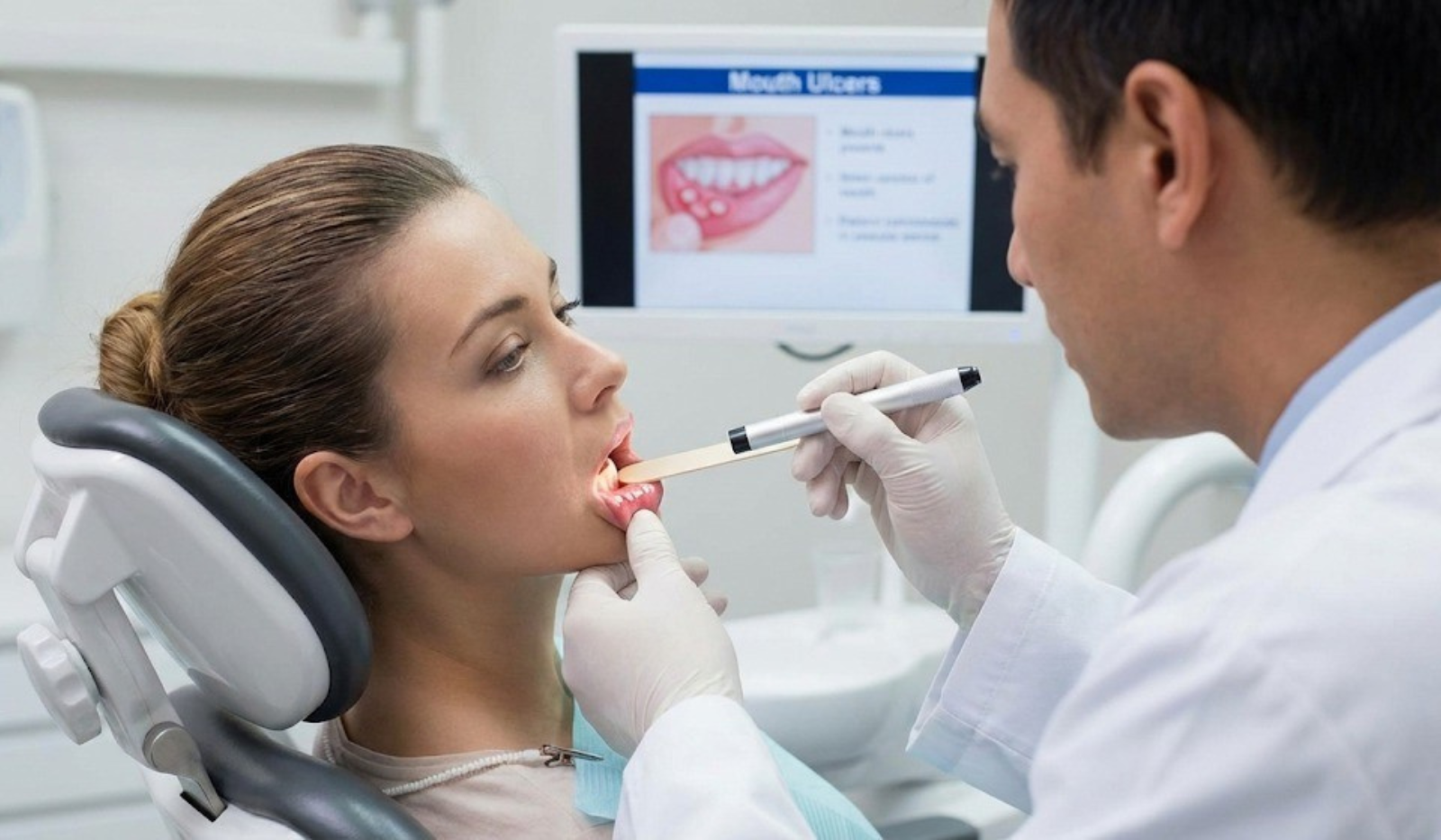
Mouth ulcers (also known as oral ulcers or canker sores) are small, painful sores that appear inside the mouth—on the cheeks, lips, tongue, gums, or palate. While most ulcers heal on their own, recurrent or long-lasting ulcers may indicate vitamin deficiencies, infections, stress, sharp teeth, or underlying medical conditions.
At our clinic, we provide accurate diagnosis and advanced treatment options to relieve pain, promote healing, and prevent frequent recurrences.
The most common type. Painful, round or oval ulcers with a yellow‑white center.
Minor: Small, heal in 7–10 days
Major: Larger, deeper, may leave scars
Herpetiform: Multiple tiny ulcers merging together
Caused by biting the cheek, sharp teeth, braces, ill‑fitting dentures, or accidental trauma.
Seen in viral infections such as herpes simplex, hand‑foot‑mouth disease, etc.
Caused by lack of Vitamin B12, iron, folic acid, or anemia.
Associated with stress, acid reflux, hormonal imbalance, gastrointestinal disorders, and autoimmune diseases.
Note: Needs professional evaluation.
Identifying the cause helps prevent recurrence.
Topical Gels & Medicated Mouthwashes
Reduces pain, inflammation, and speeds healing.
Vitamin & Nutrient Supplementation
For ulcers due to Vitamin B12, iron, folic acid, or anemia.
Laser Ulcer Therapy
Quick relief, faster healing, and reduced pain—ideal for recurrent ulcers.
Treatment for Sharp Teeth / Dental Irritants
Smoothing sharp edges, adjusting appliances, or repairing fillings.
Antiviral Treatment
For ulcers caused by viral infections (only if indicated).
Stress & Dietary Management
Guidance to minimize triggers and prevent frequent outbreaks.
Investigations for Recurrent Ulcers
Blood tests, habit assessment, allergy screening, or systemic evaluation.
We tailor treatment based on the type, cause, and frequency of your ulcers.
We focus on treating the ulcer AND preventing it from coming back.
If your ulcers are frequent, painful, or not healing on time, visit our clinic for a complete evaluation and effective treatment. Early care ensures faster relief and long-term prevention.
Mouth ulcers (canker sores/oral ulcers) are small, painful sores that develop on the inner cheeks, tongue, lips, or gums. They are usually harmless but can be very uncomfortable.
Common causes include:
A proper evaluation helps identify the exact cause.
Most mouth ulcers (especially aphthous ulcers) are not contagious. Viral ulcers—such as those from herpes—can be contagious and need specific treatment.
Minor ulcers heal in 7–10 days, while major or recurrent ulcers may take longer. If an ulcer doesn’t heal within 2 weeks, you should see a dentist.
Seek professional care if the ulcer:
Persistent ulcers may indicate an underlying condition.
At our clinic, treatment may include:
Treatment depends on the cause and severity.
Yes. Stress and lack of sleep are major triggers for recurrent mouth ulcers.
Yes. Common triggers include:
Avoiding triggers helps prevent recurrence.
Prevention includes:
Regular dental check-ups can prevent repeated ulcers.
Yes. Gastric acidity, IBS, celiac disease, and inflammatory bowel conditions may trigger recurrent oral ulcers. Professional evaluation helps rule out systemic issues.
Not always. While poor hygiene can cause bacterial buildup, many ulcers result from deficiency, stress, allergies, or immunity-related conditions.
Yes. Children commonly develop ulcers due to accidental biting, viral infections, nutritional deficiencies, or stress from school. Treatment is safe and effective for kids.
Yes. Laser therapy provides instant pain relief, reduces healing time, and is completely safe and non-invasive.
No. Continue brushing gently. Using a mild, SLS-free toothpaste may reduce irritation.